
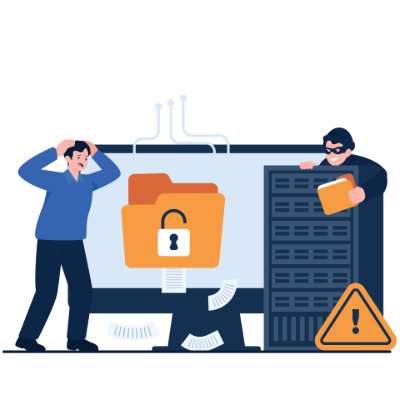
Modern Medical practices face unique challenges when it comes to managing their technology infrastructure. From protecting sensitive patient information to ensuring seamless communication between departments, the digital landscape of healthcare continues to evolve. Secure IT solutions have become essential for medical practices of all sizes, helping them navigate these complexities while maintaining focus on what matters most: patient care.
IT Support Business Models by Macro Systems
In our modern business landscape, technology keeps companies moving, serving customers, and staying competitive. But as digital operations expand, so does the need for protection. Cybersecurity has become a necessary part of running a modern organization, yet many still assume that a single tool or software is enough to stay secure. In reality, cybersecurity works best when it uses multiple layers—each one supporting the other to create a strong, reliable defense. Comprehending these layers doesn’t have to be complicated, and learning how they work together can help any business stay confident in a constantly changing digital world.
A backup does not truly exist until you have successfully restored from it; this is the hard truth of information technology. Many business owners and internal teams depend on the green checkmark in their software dashboard to signify safety. However, that status light can be misleading, masking deep-seated issues that only appear when a crisis begins.
With AI now being used by adversaries to reverse-engineer patches and generate exploits in hours rather than weeks, our old Patch Tuesday rhythm is essentially an open invitation to hackers. The truth is, the patching gap is a competitive weakness.
If we want to protect our businesses without drowning our teams in manual toil, we have to stop treating patching as a checklist and start treating it as a dynamic, intelligent discipline. Here is how we’re rethinking the vulnerability situation.
We see the behind-the-scenes of dozens of businesses while working in IT. To many, a Point of Sale (POS) system is often viewed as just a digital cash register, but it’s actually the central nervous system of a modern business. When it works, it is invisible; when it fails, the entire operation grinds to a halt. As we move through 2026, the complexity of these systems has reached an all-time high. Listed below are five of the biggest challenges we see businesses facing today from an IT perspective.
Every modern business is a technology business: whether you run a boutique creative agency, a high-volume law firm, or a retail shop, your ability to operate depends entirely on your hardware, software, and connectivity.
When the Blue Screen of Death appears or your server decides to take an unscheduled nap, the clock starts ticking; and it’s ticking directly against your bottom line. This is where remote support shifts from being a nice-to-have to a mission-critical asset.
Of all the features and capabilities today's workplace software provides, it is very possible that the spreadsheet tool offers the most… with relatively few people realizing what they have access to within it. There are many very smart inclusions that can make life much easier for those who know what they’re doing.
For example: if your data is formatted correctly, it is easy enough to identify which day of the week a given date falls on.
You’ve probably looked at your business’ technology bills and seen nothing but dollar signs leaving your bank account. For many, IT feels like a necessary evil or a cost center that only gets attention when something breaks. The hard truth is that many businesses fail to scale because their technology wasn't built for the growth they planned.
Working in IT, our job is to worry so you don’t have to. The things keeping us up at night in 2026 are significantly different from the headaches of five or ten years ago. Thanks to the invisible power of AI-driven automation and mature cloud ecosystems, many of the manual, soul-crushing tasks that used to define IT support have essentially vanished.
The greatest vulnerability in your business’ network security has nothing to do at all with the systems in place, it’s your employees who will ultimately put your business at risk. Hackers depend on the fact that your team is busy, stressed, and trying to be helpful, and this helps hackers engineer moments where employees will click first and ask questions later, much to your business’ detriment.
Take a quick walk through your company. When you look at the screens on the walls, what’s actually on them? If it’s a generic weather widget, a “Happy Monday!” slide that’s been up for three weeks, or a “No Signal” box, you aren’t looking at a technology investment.
You’re looking at a $10,000 screensaver.
If you put yourself in the shoes of an insurance company, you might find yourself thinking twice about protecting someone who actively partakes in risky behavior. The same can be said for a business insurance provider, especially when the behavior can easily be prevented through proactive and preventative measures. This is why many insurance providers are establishing minimum safeguards and compliance requirements, if only to protect their own skins.
Is your organization still depending on a patchwork system of spreadsheets, sticky notes, and emails to manage all of its customer relationships? This kind of manual work is not cheaper or more efficient; it only accumulates organizational debt that will eventually come due. Poor customer relationship management results in hundreds of hours of lost productivity throughout the year, directly translating into lost sales and profits for your business.
In the late 1990s, computer security was simple: you locked the door to the server room and hoped nobody guessed that the admin password was “admin.”
Fast forward to today, and that is simply unrecognizable. Hoping for the best isn't just a poor strategy, it’s a liability. As you set your business goals for the coming year, it’s time to move past legacy mindsets. Modern protection requires more than just software; it requires a team that is trained, vigilant, and ready to act as your first line of defense.
Modern business technology is like operating in the wild west. It’s expansive, fast-moving, and if you aren’t careful, it can gallop away from you before you even realize it’s gone. Between SaaS sprawl, underutilized hardware, and hidden maintenance fees, many companies are overspending by 20-to-30 percent on their entire technology stack. That’s a lot of money.
It’s time to saddle up and start earning some savings. Listed below is a guide of sorts that can help you round up your expenses and bring your technology budget back under control.
As we stand on the threshold of a new year, it’s worth noting that the term "cybersecurity" didn't even enter the common lexicon until the late 1980s. Before that, we just called it "computer security" - mostly involving locking the server room door and hoping nobody guessed the password was "admin."
Fast forward to today, and the game has wildly changed. "Hoping for the best" is no longer a viable business plan. As you prepare your resolutions, it’s time to hit the ground running with a cybersecurity posture that is as modern as the threats we face, a goal that will require training for your entire team.
We know the headache well: that one important, but crusty, legacy application that the business relies on, but the vendor has long since abandoned. It's a non-negotiable part of operations, but it sits on an outdated OS or platform, a massive, blinking security vulnerability in the middle of our network. We can't patch it, and we can't immediately rip and replace it.
So, how do we sleep at night? The answer, increasingly, is via the strategic application of cloud computing. The cloud isn't just about cost savings or scalability; it's a fundamental change in how we manage risk, especially the risk posed by unpatchable, end-of-life (EOL) software.
As a technology aficionado specializing in the rapid evolution of the digital age, I find few sectors as compelling and transformative as the automotive industry. Over the past two decades plus, the automobile has undergone a metamorphosis far beyond mere aesthetic tweaks or incremental engine improvements. We've witnessed a profound digital revolution, turning what was once a purely mechanical marvel into a sophisticated, interconnected, and intelligent machine.
Let's take a drive through the past 25 years highlighting some of the most significant digital innovations that have redefined our relationship with the car.
Cyberthreats are no longer rare occurrences - they are constant, evolving, and frequently highly sophisticated. This reality makes a proactive approach to cybersecurity absolutely mandatory. Businesses that only react to attacks find themselves perpetually engaged in damage control.
Failing to establish a deliberate, comprehensive cybersecurity strategy exposes any organization to repeated breaches, critical data loss, and ultimately, a loss of customer trust that can lead to financial collapse. This overview details why addressing these persistent risks is critical for the success of any contemporary business.